




















Across the country, and here in Kentucky, policies and rhetoric surrounding public education point to a troubling trend: the steady deprofessionalization of teachers.
The message feels clear: teachers are essential, but their expertise is optional.
And this has consequences.
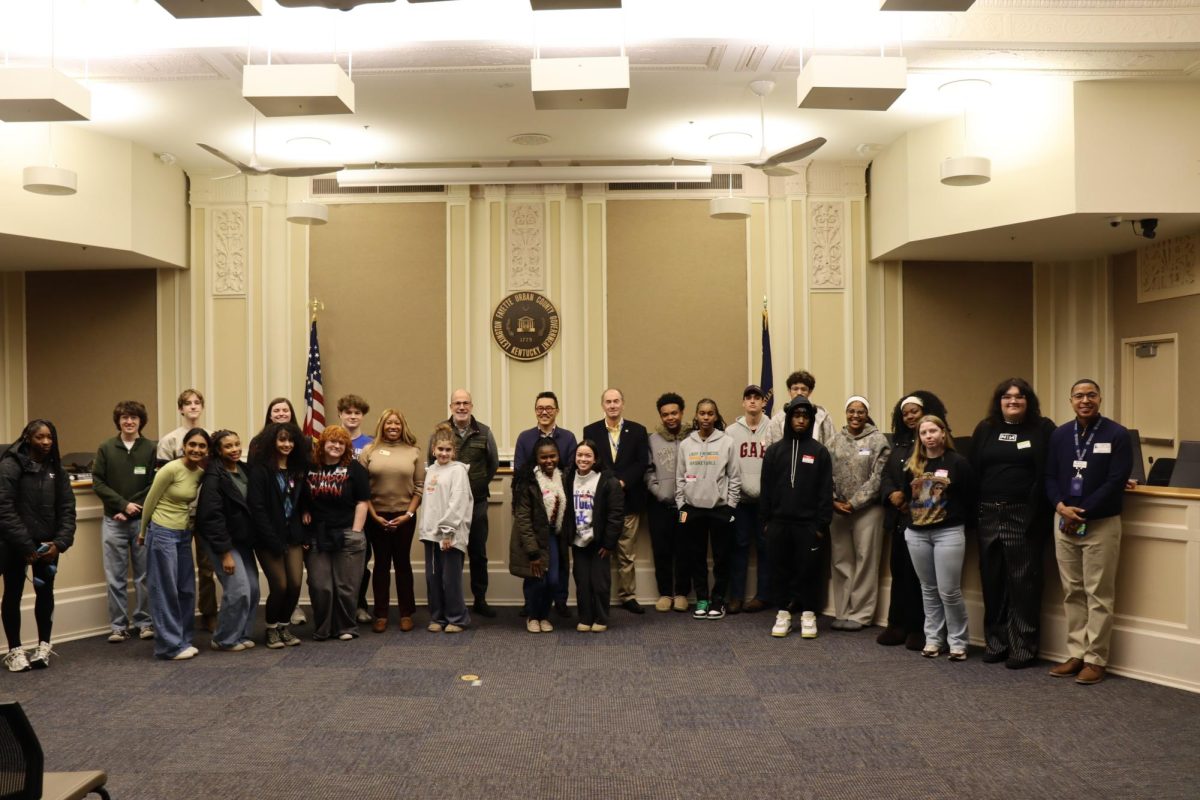
At Lexington’s Future NOW, a 250 LEX event at STEAM academy on Dec. 9, Tyler Murphy, chair of the Fayette County Board of Education, said, “Deprofessionalizing teachers is one of the biggest threats facing education in the United States.”
There are three reasons this seems to be happening now: teacher pay, teacher trust, and a lack of respect.
Teacher Pay
Teachers pour hours into their profession, yet their income doesn’t reflect their hard work.
Robbie Fletcher, the Kentucky Commissioner of Education, who was also present at the event, said that the most important thing we can do is increase teacher pay.
Murphy agrees.
He said that although Fayette County has the highest starter salary in the state, “it’s still not enough.”
He argues that what’s happening now isn’t accidental.
Teachers, Murphy notes, earn significantly less than peers with comparable degrees.
“That’s not just a budget issue,” he said, “it’s a societal one.”
Fletcher agrees that compensation is foundational.
“To me, teacher pay is the first place to start,” he said. “It is the most valuable profession we have. Without teachers, we don’t have doctors, lawyers, or commissioners.”
Teacher Trust
Murphy said that another issue is trusting teachers to be the professionals they were trained to be.
“Part of the broader attack on public schools has been delegitimizing the work of educators,” he said. “It’s about not trusting them to do the job they were trained to do.”
Recent Kentucky legislation has intensified these concerns.
Bills, such as Senate Bill 181, which regulates teacher-student communication, were introduced to promote student safety. But the way these laws are written assumes teachers are liabilities rather than professionals.
“The troubling part is that teachers weren’t at the table,” Murphy said. We see education bills passed in Frankfort that affect classrooms every day, but the people with the most insight– teachers–aren’t being listened to.”
He said that this disconnect creates problems and that students ultimately pay the price.
Commissioner Fletcher also acknowledged this tension. Although he feels that teachers are respected at the state level, he admits some legislation has had unintended effects.
“SB 181 had good intentions,” he said. “But there were unintended consequences. We’re talking about laws meant to address a very, very small percentage of bad actors while 99.99% of teachers are doing the right thing every day.”
Many believe that when laws are built around mistrust, even good intentions can erode morale. Teachers begin to feel surveilled rather than supported, constrained rather than respected.
Senior Yoselin Arevalo, an aspiring teacher, said that teachers aren’t respected the way they should be. She talked about the responsibilities of being a teacher that go beyond just teaching.
“They also have to take care of these kids like [they are] their own kids.”
Commissioner Fletcher said that he remains hopeful that collaboration can improve future policy. He points to ongoing conversations between legislators and education groups like the Kentucky Education Association (KEA).
“There’s recognition that some of these bills need to be amended,” Commissioner Fletcher said. “The sponsor of SB 181 has met with educator groups to see how it can better meet its intended purpose.”
Teacher Respect
Because of these issues, there is a teacher shortage. Often framed as a pipeline problem, the argument is that too few people want to teach.
For aspiring educators, the message can be discouraging before they even enter the profession. Student teaching, a full-time commitment, is often unpaid, creating financial barriers that disproportionately affect lower-income students.
“If we want teachers, we can’t make it financially impossible to become one,” Murphy said. “Unpaid student teaching sends the message that this work isn’t worth compensating.”
While Kentucky lawmakers passed legislation to provide stipends for student teachers, funding remains uncertain.
Teachers have been devalued on a larger scale, and that comes with lasting effects.
The Federal Department of Education published a list of degrees that are no longer designated as “professional.”
Teaching is no longer considered a professional degree.
Mrs. Shawna Pinson, a Family and Consumer Science teacher, said that she worries that not considering teachers as professionals will cause teaching degrees to be difficult to obtain.
“If we’re not qualified as professionals and it’s not a professional degree, are they still going to get financial aid to back teachers to go through college?”
That message echoes beyond teachers. When teachers are overworked and underpaid, it has definitely discouraged many students from pursuing the profession.
“I feel like [lack of financial aid] is gonna make a lot of people maybe not want to do it anymore,” Arevalo said. “It’s scary.”
Deprofessionalization isn’t just one action; it’s when small actions build up into something bigger. But rebuilding trust takes more than revisions. It requires a cultural shift, one that treats teachers as partners rather than problems.
Education has been described as a shared responsibility for a long time. If that’s true, then respecting teachers must be part of that commitment, in both words and actions.