















When Winter Storm Fern arrived, Kentuckians had already been warned. Snow and ice in amounts we hadn’t seen for years were forecasted, and Governor Andy Beshear declared a state of emergency before the state even saw its first snowfall.
But even though Kentucky and the nation braced for impact, Fern took its toll. According to PowerOutage.US, 75,837 Kentuckians had lost power by Sunday afternoon, and Kentucky’s fatality count following the storm was 22.
The National Weather Service reported that Lexington received 5.5 inches of snow and 1.48 inches of precipitation (sleet and freezing rain). While estimates warned that Kentucky could see double-digit inches of snow, ice accumulation, which was much higher than expected, proved to be the bigger problem.
These conditions left some neighborhood streets covered for weeks — too dangerous for school buses to navigate. As a result, FCPS schools were closed for 11 instructional days. In fact, when students eventually returned, the first day back operated on a two-hour delay to ensure safety.
Of the missed days, only four were designated as Non-Traditional Instruction (NTI) days and therefore do not need to be made up, while the remaining days will require makeup time. The most recently updated school calendar now extends instructional days through June 2 and adds full school days on March 13 and April 13.
Dunbar science teacher Mr. Jesse Howell said that the missed days disrupted lesson plans and forced him to cut content.
“My students were supposed to take a test the 2 weeks ago, but now I have to decide whether I should have them do it as soon as they come back.”
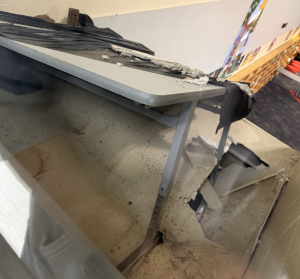
At Dunbar, the damage has been compounded by torn asphalt from parking lot scraping and, more significantly, reports from the librarian of ceiling tiles found on the floor. More significantly, Dunbar librarian reported finding ceiling tiles on the floor.
The roof fell under the weight of melting ice and snow. She said that part of the library now has to be closed because of the damage. The trophy case also knocked over several bookshelves, similar to the damage the school experienced after a heavy rainstorm in early fall.
Lexington’s response to the storm was widely criticized. Many complained that even after many days, turning lanes throughout the city remained inaccessible. Residents on unranked roads, which are low-priority for clearing, dealt with difficult road conditions for weeks.
“For days, getting out of my neighborhood was a nightmare. My street was iced over, and it stayed that way for more than 2 weeks,” senior Brock Overton said.
One of the city’s biggest critics was Governor Beshear, who called out city officials during his Team Kentucky update on February 5th. He said that the state offered support to Lexington, but was declined. However, Mayor Linda Gorton was adamant that she would “never instruct any employee to refuse any kind of help from the state.”
Beshear added that the relatively better conditions of state roads and interstates were a result of pre-treatment procedures that Lexington should have probably done, but Mayor Gorton countered again, asserting that the city “did extensive pre-treating for this storm.”
Winter Storm Fern marks the second winter season that the city and Mayor Gorton have received major public backlash for their storm responses. After Winter Storm Blair in 2025, the city invested $2 million into its winter response and snow-removal plans, but to Beshear and others, the city still failed.
“This is the second one in a row that we should have seen better results, and I think the mayor has said that and has taken responsibility,” Beshear said.

