



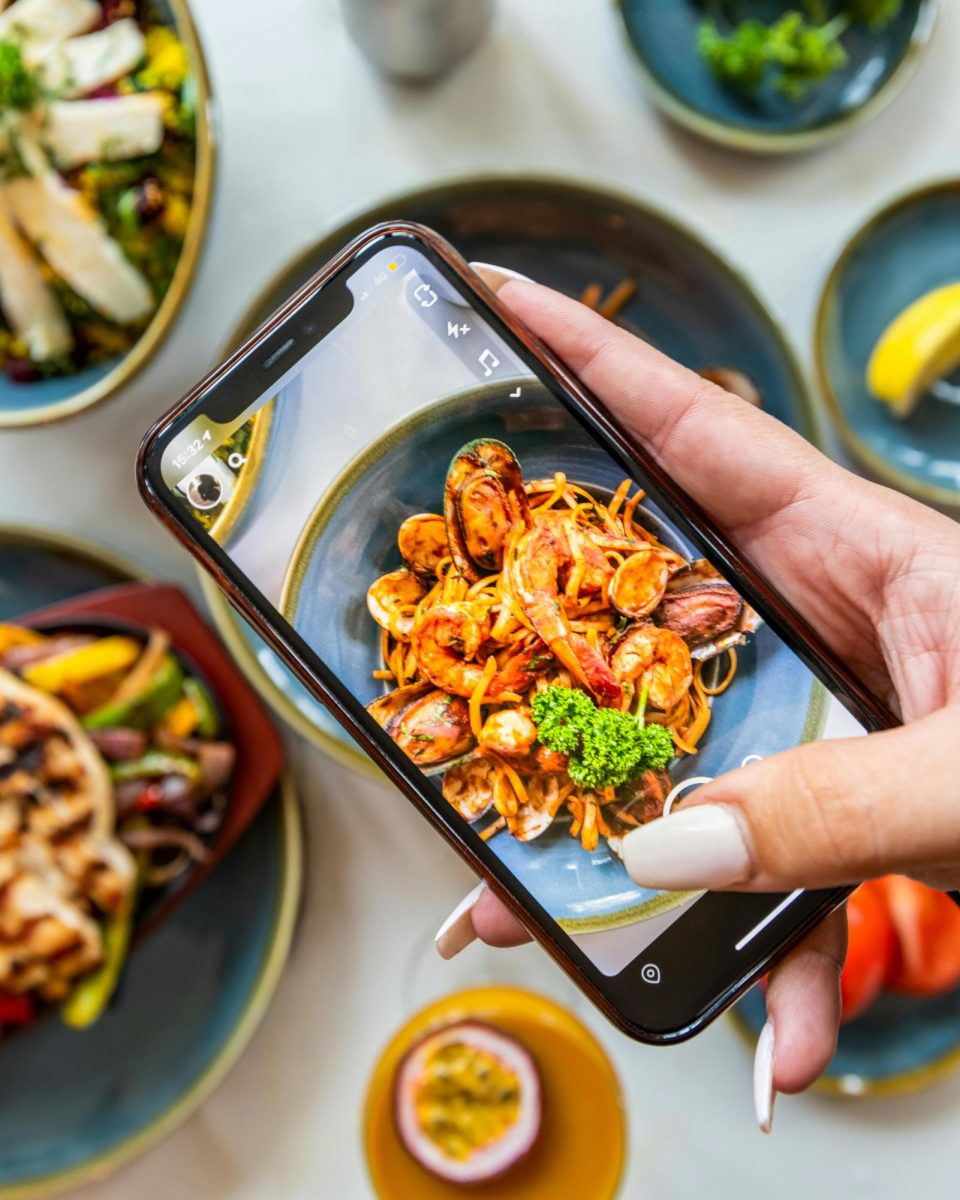











The trend is driven by videos that show a full day of clean eating, but these “what I eat in a day” videos can set unrealistic expectations, as research has found that this type of content is linked to unhealthy social comparisons and disordered eating behaviors. When viewers see what seem like ideal eating habits, it can lead to unhealthy comparisons that have no real basis.
In a world where social media impacts day-to-day life, where do healthy eating habits come in, and when does it go too far?
In recent years, healthy-eating trends have been big on social media, especially among teens. Influencers share recipes, such as high-protein dessert substitutes, that flood “for you” (FYP) pages. These videos are meant to show exactly what teens should eat and when. While it can be beneficial in some ways, it’s important to also keep in mind that these videos serve a purpose: to influence.
According to the National Institute of Health, teens learn about their food choices through social media.
“From a public health perspective, TikTok presents a novel, cost-effective opportunity to widely distribute accurate and credible health information.”
Evidently, teens are feeding into information they see online. One common health discussion is the consumption of clean ingredients, and studies show that about 90% of Gen Z consumers avoid artificial sweeteners and ingredients, with many preferring organic stores.
While older generations often look at healthy eating as a way to lose weight or manage conditions, Gen Z has a different approach. Compared to Gen X, they are twice as likely to pursue a healthy diet simply for a better lifestyle. These choices are shaped heavily by social media platforms, as teens follow food trends and healthy alternatives seen online, but other factors contributing to this shift include increased access to nutritional information and a greater understanding of mental health and its connection to food.
Influencers themselves have proven that the majority of what you see online isn’t nearly as picture-perfect as it seems.
In 2024, a TikToker named Janelle Rohner was selling online courses that she said aided her sudden weight loss. They included changes in diet and eating habits. Recently, it was found that she had been using weight-loss drugs as a “tool to hit her goals,” likely to increase sales of her programs by framing the results as achievable through her courses alone.
A 2022 study published by the University of California said, “food, nutrition, and weight-loss content on TikTok perpetuates a ‘toxic’ diet culture among teens and young adults.” Is this type of content harming teens not just physically but also mentally?
When teens interact with one such video, the algorithm pushes the content even further.
Although social media can encourage healthy lifestyles, it’s important to realize that every person is different. Even when social media promotes extremes, teenagers should remember that balance is more important than perfection.
For more information about healthy eating habits, visit the National Institutes of Health.

