




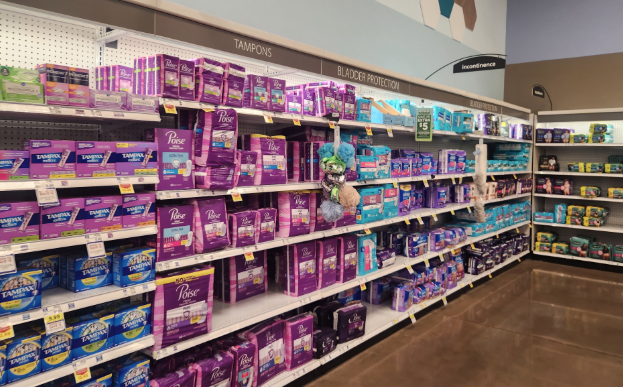









A new lawsuit filed in Kentucky is bringing attention to a long-debated issue: the taxation of menstrual products. Two women, Alexandria Baldon and Skylar Davis, are suing the state, arguing that the current 6% sales tax on items like tampons and pads is unfair and unconstitutional.
The argument is simple. Menstrual products are not optional. They are necessary. So why are they taxed like non-essential goods?
Across the U.S., 18 states, including Kentucky, still tax period products. Over a lifetime, that cost adds up to thousands of dollars. Meanwhile, some other medical necessities are tax-exempt. The lawsuit calls this distinction “arbitrary and irrational,” raising a larger question about fairness.
For many students, though, this issue is much more immediate than a court case.
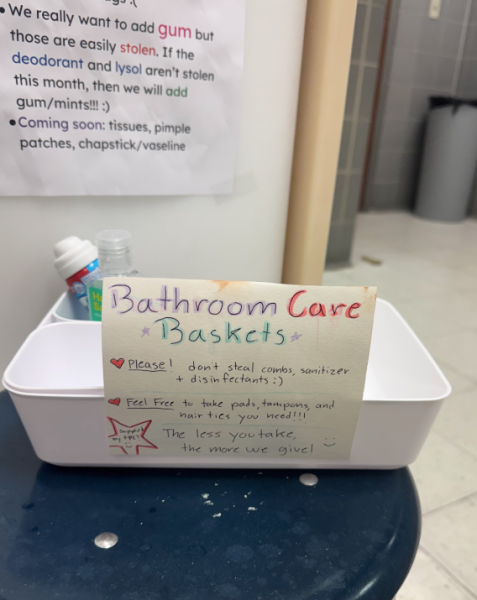
At Paul Laurence Dunbar High School, students have begun addressing the problem themselves. The Philanthropy Club recently placed baskets filled with free tampons, pads, and other essentials in girls’ bathrooms.
“It’s nice to know I can grab something in a desperate situation,” sophomore Ayn Chung said.
Desperation: a feeling students should never have to experience.
“It’s not something that you can wait on,” freshman Tate Jordan. “If you don’t have a hygiene product when you need one, it quickly becomes an emergency.”
Others pointed to cost as the bigger issue.
“People don’t realize how often you need them,” sophomore Sophie Woolum. “It’s not something you can just skip buying.”
Nearly 1 in 4 students in the United States have struggled to afford menstrual products, a problem often referred to as “period poverty.” In addition, about 20% of teens report difficulty accessing these products when they need them, and many say it impacts their ability to fully participate in school.
Additionally, studies show that lack of access can lead to missed class time, with some students leaving school early or skipping entirely when they don’t have the supplies they need.
Others say the cost itself is the bigger issue.
“People don’t realize how often you need them. It’s not something you can just skip buying,” junior Laibah Afzal said.
Senior Maheen Khalid questioned why the issue isn’t talked about more: “Why did we just accept this as normal? We need to be talking about this.”
According to the School of Public Health at the University of Michigan, period poverty is often described as an “ignored” or “neglected” public health issue, and this lack of awareness is central to the problem.
Some teachers at Dunbar have stepped in to fill the gap.
Mrs. Keia Scott-Newsome provides menstrual products and other essentials like deodorant for her students.
Mr. James Whitfield, a biology teacher who also supplies these products, believes it shouldn’t fall on individual teachers.
“Schools provide everything that students require to get through a day,” he said. “When you don’t, you put that burden on your teachers. And we’re not going to let students go without something they need—so that cost falls on us.”
Some school districts across the country have already begun requiring free menstrual products in bathrooms. In states like New Jersey, laws now mandate that schools provide tampons and pads in bathrooms for students in grades 6–12. Similar policies exist in states like Washington and Connecticut, where schools are required to stock menstrual products at no cost.
The voices at Dunbar reflect the same argument being made in court: access to menstrual products isn’t a luxury. It is a necessity.
The lawsuit filed by Baldon and Davis may take time to resolve, but the issue is already affecting students now—in classrooms, in bathrooms, and in moments where access matters most.
The bottom line: if something is essential, why is it being taxed?

